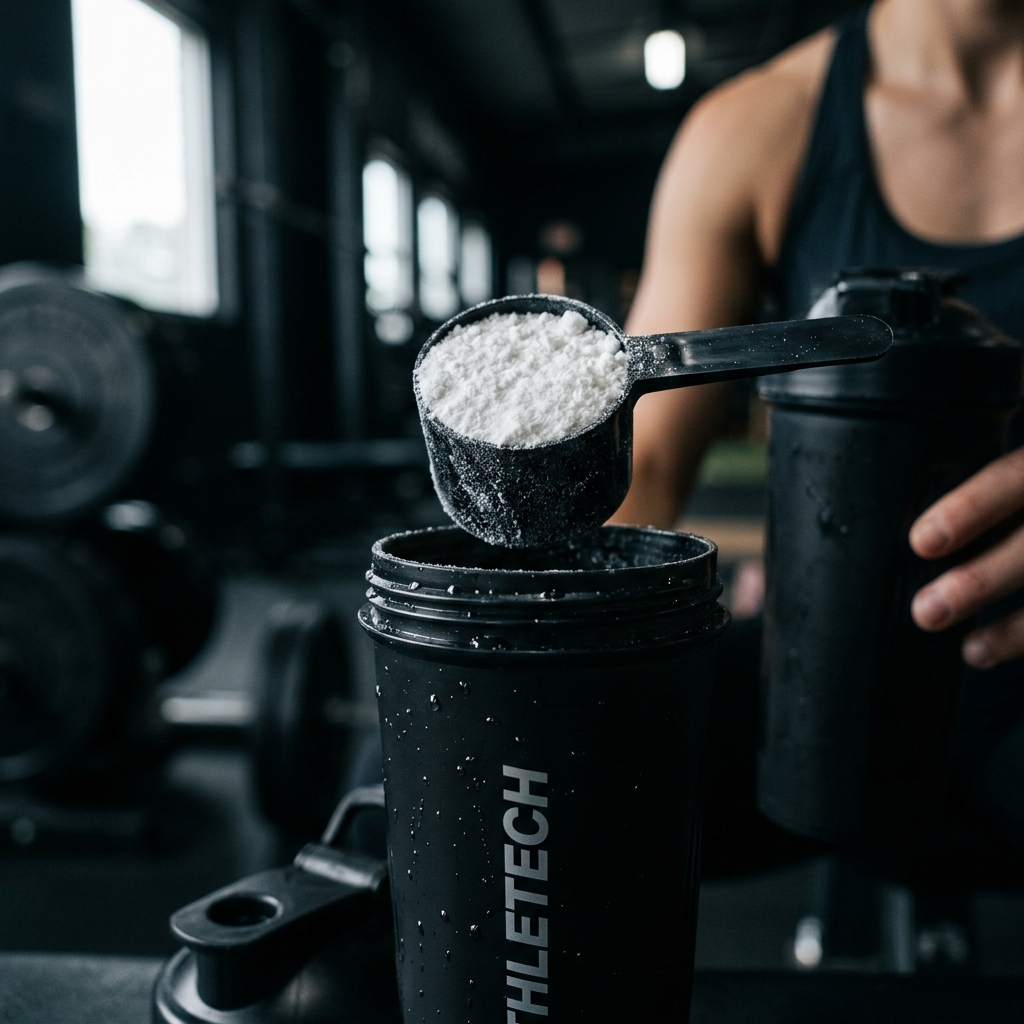
Creatine monohydrate is the most thoroughly researched and scientifically validated sports supplement in existence. It is proven to increase strength, power output, and muscle hypertrophy. However, there is still widespread confusion about how to take it correctly.
How Creatine Works
Creatine is stored in your muscles as phosphocreatine. During high-intensity exercise like heavy lifting or sprinting, your cells use phosphocreatine to quickly regenerate Adenosine Triphosphate (ATP), the primary energy currency of your muscles. By supplementing with creatine, you saturate your muscle cells, giving them more rapid energy reserves during intense workloads.
Loading Phase vs. Daily Consistency
There are two primary protocols for starting creatine supplementation, and you can calculate your personalized dosage for both using our Creatine Calculator:
1. The Loading Protocol (Fast Saturation)
Take 20 grams per day (divided into four 5g doses) for 5 to 7 days, followed by a daily maintenance dose of 3 to 5 grams.
- Benefit: Saturates muscle creatine stores within a week, allowing you to see performance improvements faster.
- Drawback: Can cause mild stomach discomfort or bloating in some individuals due to the high volume.
2. The Constant Protocol (Gradual Saturation)
Skip the loading phase and simply take 3 to 5 grams per day from day one.
- Benefit: Extremely simple, zero digestive discomfort.
- Drawback: Takes 3 to 4 weeks to fully saturate your muscles and start showing benefits.
Should You Time Creatine?
The time of day you take creatine does not matter significantly. Because creatine builds up in your cells over time, consistency is far more important than timing. Some research suggests taking it post-workout with carbohydrates and protein might slightly enhance absorption, but any time of day will achieve saturation if taken consistently.
Conclusion
For most lifters, taking 5 grams of Creatine Monohydrate daily is the perfect, lifetime protocol. You do not need to cycle off it, and you do not need expensive, fancy versions (like HCL or Ethyl Ester)—monohydrate remains the gold standard.