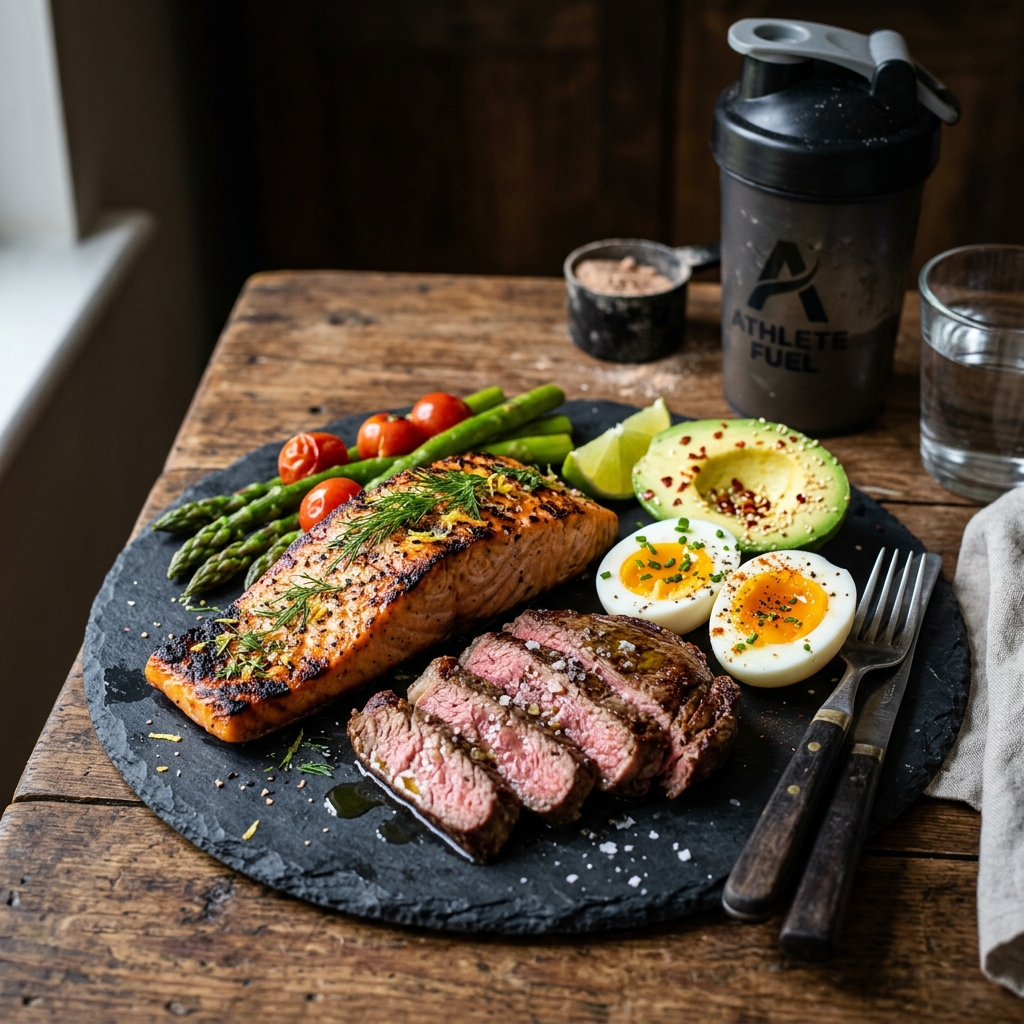
If you've spent any time in a gym or browsing fitness forums, you've likely heard that you need massive amounts of protein to build muscle. Common gym lore suggests consuming 1 gram of protein per pound of body weight (2.2g/kg) daily—or even more. But what does the actual scientific research say?
The Science of Protein Synthesis
Protein is the building block of muscle tissue. When you lift weights, you create micro-tears in your muscle fibers. Muscle Protein Synthesis (MPS) is the process by which your body repairs and grows these fibers, and it requires dietary protein to occur. You can check your daily protein demands directly using our Protein Calculator.
However, your body can only use a certain amount of protein for muscle building at any given time. Once your muscles are saturated, excess amino acids are oxidized for energy or converted into urea and excreted. To balance your other macronutrients alongside protein, use our Macro Calculator.
Optimal Protein Intake for Muscle Growth
A landmark meta-analysis published in the British Journal of Sports Medicine (Morton et al., 2018) analyzed 49 studies involving 1,863 participants. The researchers concluded that for building muscle mass and strength, the optimal daily protein intake is:
- 1.6 grams per kilogram of body weight (0.73g/lb) per day.
The study found that consuming more than this threshold yielded no statistically significant benefit for muscle gains. For a 180 lb (82 kg) lifter, this equates to roughly 130 to 135 grams of protein per day—well below the typical "1 gram per pound" gym recommendation.
When Do You Need More Protein?
While 1.6g/kg is the sweet spot for general muscle building under maintenance or surplus calories (which you can estimate using our Calorie Calculator), there are a few scenarios where higher protein intake is beneficial:
- Caloric Deficit (Fat Loss): When you are dieting to lose weight, your body is in an energy deficit and is more prone to burning muscle tissue for energy. Consuming 2.0 to 2.4g/kg (0.9 to 1.1g/lb) can help preserve lean muscle mass.
- Advanced Lifters: Individuals with years of training experience carrying close to their genetic limit of muscle mass might benefit from slightly higher intakes (up to 2.0g/kg) to support recovery.
- Master Athletes: As we age, our bodies experience "anabolic resistance," meaning we become less sensitive to amino acids. Older adults (65+) may need 1.8 to 2.2g/kg to stimulate muscle protein synthesis as effectively as younger lifters.
Timing and Distribution
To optimize muscle protein synthesis throughout the day, it is highly recommended to distribute your protein intake evenly across meals rather than eating it all at dinner. You can calculate your perfect meal-by-meal splits using our Protein Distribution Calculator.
Conclusion
Unless you are in an aggressive fat-loss phase or are an advanced competitor, aiming for 1.6 to 2.0g/kg (0.73 to 0.9g/lb) of body weight is more than enough to maximize your gains. Focus on consistency and high-quality protein sources (eggs, chicken, fish, tofu, dairy, and legumes) spaced throughout the day.