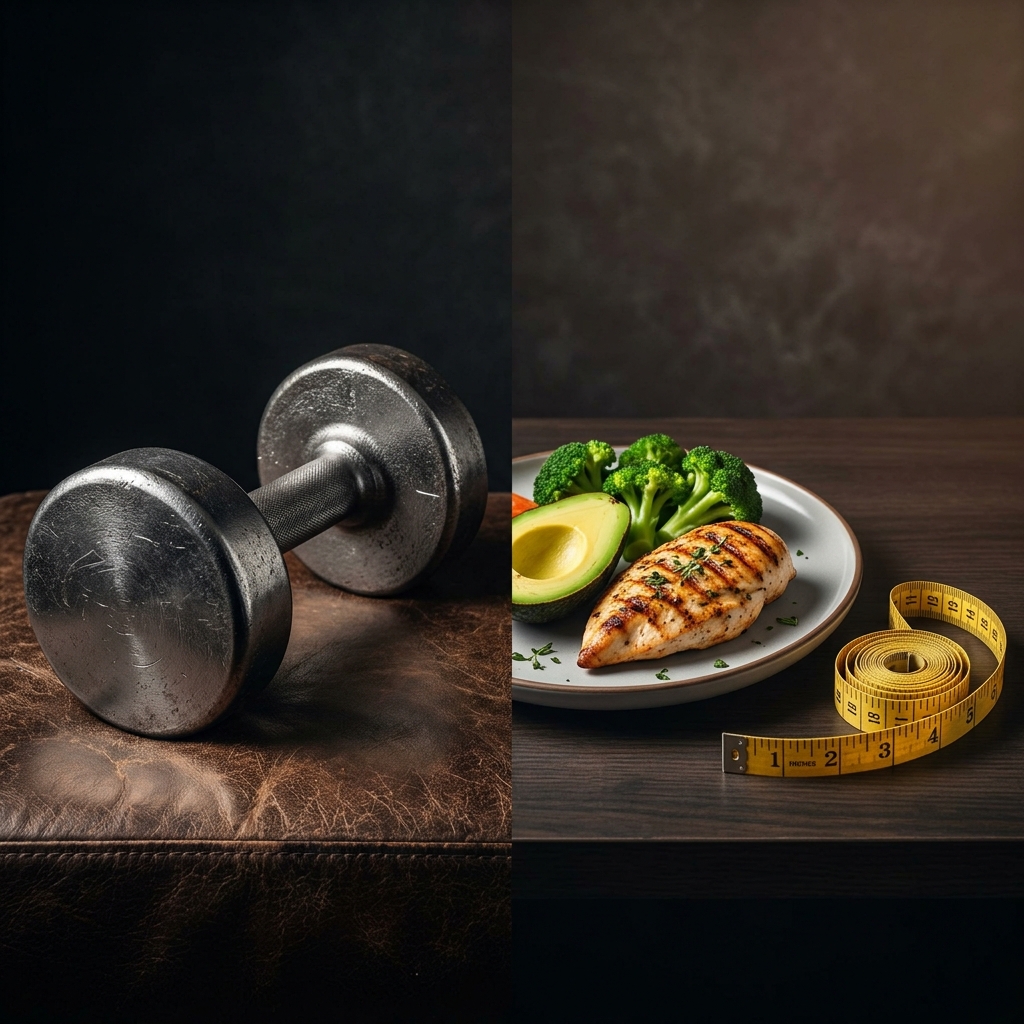
Body recomposition means reducing body fat while increasing or at least preserving lean muscle mass. It is one of the most searched fitness goals online because it promises what most people want: a leaner physique, better muscle definition, a smaller waist, and better performance without a traditional bulk and cut cycle.
The good news is that body recomposition is absolutely possible. The bad news is that it is slower, more precision-dependent, and less dramatic on the bathroom scale than most social media transformations suggest. If you want to estimate your likely pace, start with our Body Recomposition Calculator.
What Body Recomposition Actually Means
In practical terms, body recomposition happens when your body uses stored energy from body fat to support recovery and muscle-building processes while you also provide enough training stimulus, protein, and total calories to preserve or add new lean tissue. This is why body recomposition is not just a diet strategy. It is a combined nutrition, resistance training, recovery, and consistency strategy.
Many people misunderstand body recomposition because they expect scale weight to drop quickly every week. But if you lose 2 pounds of fat and gain 1 pound of muscle over the same period, the scale only changes by 1 pound even though your body composition improved significantly. That is why tracking your starting body fat with our Body Fat Calculator and lean mass with the Lean Body Mass Calculator is far more useful than relying on weight alone.
Who Gets the Best Body Recomposition Results?
Not everyone recompes at the same rate. The people who usually see the best results are:
- Beginners: New lifters respond extremely well to progressive resistance training and often build muscle while losing fat for several months.
- People returning after a break: Muscle memory makes it easier to regain lost lean mass while dropping fat.
- People with higher starting body fat: Larger energy reserves make it easier to support training and recovery during a mild calorie deficit.
- Well-programmed intermediate trainees: Even advanced lifters can recomp, but the pace is slower and requires tighter control of calories, protein, sleep, and training volume.
Calories for Body Recomposition
The biggest question is always whether body recomposition requires a calorie deficit, maintenance calories, or a small surplus. The answer depends on your training age and body fat percentage.
- Higher body fat beginners: Usually do best with a mild calorie deficit of roughly 250 to 400 calories below maintenance.
- Lean intermediates: Often do better around maintenance calories or a very small deficit.
- Very lean advanced lifters: Usually need carefully controlled maintenance or a small surplus to gain muscle efficiently.
You can estimate your maintenance intake and recomposition targets using our Calorie Calculator. The key is avoiding an aggressive crash diet. A steep calorie deficit may speed up short-term weight loss, but it usually reduces training performance, slows recovery, increases hunger, and raises the risk of muscle loss.
Protein Intake for Recomposition
If body recomposition has a nutritional non-negotiable, it is protein. Higher protein intake supports muscle protein synthesis, improves satiety, and helps preserve lean mass while you lose fat. For most people, an evidence-based target is 1.6 to 2.2 grams of protein per kilogram of body weight per day, with the higher end being especially useful during a calorie deficit.
To get a personalized target, use the Protein Calculator. If your protein intake is too low, body recomposition becomes much harder because your body lacks the amino acid supply needed for repair, recovery, and new tissue growth.
Training for Fat Loss and Muscle Gain
The training side of body recomposition is not complicated, but it does require discipline. Your program should emphasize progressive overload on basic lifts and enough weekly volume to challenge the major muscle groups. You do not need marathon workouts or random circuit routines. You need structured resistance training that tells your body, "keep this muscle, and if possible, build more."
- Train with weights 3 to 5 times per week. Compound movements like squats, presses, rows, hinges, pull-ups, and split squats provide the most efficient stimulus.
- Track your lifts. If strength trends up over time, that is often a good sign your lean mass is being maintained or improved.
- Use cardio strategically. Cardio supports calorie expenditure and cardiovascular health, but too much high-intensity cardio can interfere with leg recovery and gym performance.
- Recover seriously. Poor sleep and accumulated fatigue can erase the quality of an otherwise perfect diet.
How to Measure Real Progress
SEO articles on body recomposition often talk about "transforming your body fast," but legitimate progress is measured through multiple signals:
- Waist measurement trending down
- Body fat percentage trending down
- Strength holding steady or improving
- Photos showing better muscle definition
- Stable or slightly rising lean body mass
This is exactly why recomposition can be frustrating if you only use a scale. If your goal is fat loss and muscle gain, track at least your scale weight, weekly waist measurement, gym performance, and body fat estimate together.
Common Body Recomposition Mistakes
- Eating too little: Large calorie deficits reduce performance and increase the chance of muscle loss.
- Not eating enough protein: Without adequate protein, your body has less support for lean mass retention.
- Training without progression: If you never ask the body to adapt, it has no reason to build muscle.
- Changing the plan every week: Body recomposition is slow enough that impatience becomes the biggest sabotage factor.
- Ignoring sleep: Recovery drives muscle retention and growth just as much as training stress does.
How Long Does Body Recomposition Take?
That depends on how much fat you need to lose, how much muscle you can realistically gain, and how consistent you are. A legitimate body recomposition phase often runs for 8 to 16 weeks before the changes become visually obvious. For some people, especially beginners, the first 12 weeks can produce dramatic waist reduction and better muscle definition. For leaner intermediates, the changes are usually more subtle but still meaningful.
Bottom Line
Body recomposition is real, but it is not magic. The best results come from a mild calorie deficit or maintenance intake, high protein, progressive strength training, smart recovery, and patient tracking. If your goal is to lose fat, build muscle, improve body composition, and look leaner without extreme bulking or crash dieting, body recomposition is often the most practical strategy available.