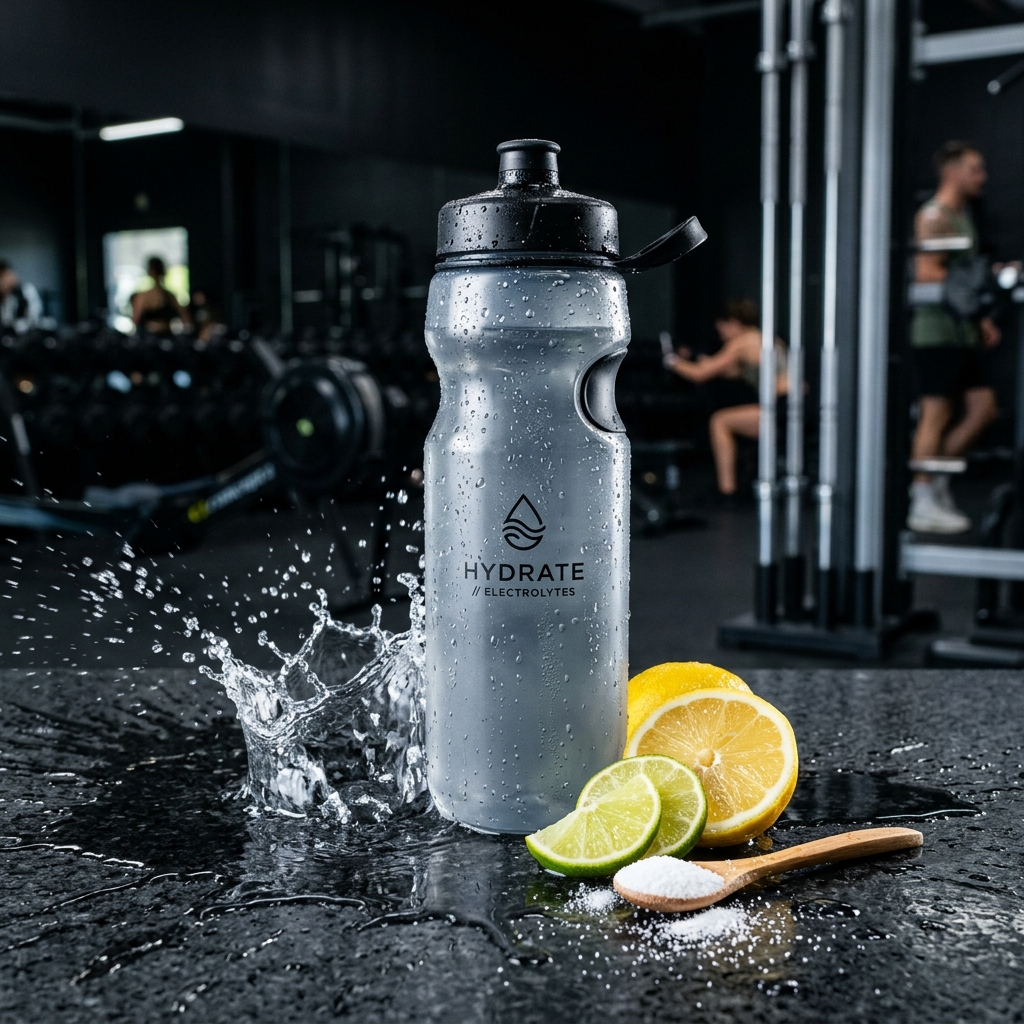
Hydration is one of the most overlooked performance variables in fitness and health. People obsess over protein intake, calorie deficits, creatine dosage, and fat-burning workouts, yet they routinely underperform because they are mildly dehydrated. Even a small drop in hydration status can reduce workout quality, raise perceived effort, worsen endurance, and make recovery feel harder than it should.
If you want a starting target, use our Water Intake Calculator or the more direct Hydration by Bodyweight Calculator. But hydration is not just about drinking more water. It is about balancing fluid intake, sweat losses, sodium, potassium, training duration, and climate.
Why Hydration Matters for Fitness and Health
Your blood volume, body temperature regulation, nutrient transport, muscle contractions, and cardiovascular efficiency all depend on proper hydration. When fluid levels fall, your heart has to work harder to deliver oxygen and nutrients. That means your pace, power output, and training quality can decline before you even feel extremely thirsty.
This is why hydration matters for nearly every goal category people search for online: weight loss, muscle gain, running performance, gym recovery, endurance exercise, healthy blood pressure, and general wellness. Poor hydration can also distort body weight readings by creating temporary fluctuations that confuse people who are tracking fat loss progress.
How Much Water Should You Drink Per Day?
The most honest answer is: it depends. Daily water needs change based on body weight, body size, diet composition, ambient temperature, training intensity, and total sweat loss. A smaller sedentary person in a cool climate may feel great on relatively modest water intake, while a heavier lifter training in summer heat may need dramatically more.
As a practical baseline, many active adults do well using a bodyweight-based estimate and then adjusting based on thirst, urine color, training duration, and sweat rate. That is exactly what our hydration calculators are designed to simplify. If your workouts push heart rate higher for long periods, pairing hydration planning with our Target Heart Rate Calculator can help you structure intensity and fluid expectations more intelligently.
Water Alone vs. Electrolytes
This is where many hydration articles stay too shallow. Water is essential, but it is not the only factor. When you sweat, you do not lose pure water. You also lose electrolytes, especially sodium, along with smaller amounts of potassium, magnesium, and chloride. Those minerals help regulate fluid balance, nerve signaling, and muscle contraction.
For shorter sessions or normal daily activity, plain water is often enough. But for long workouts, high sweat rates, hot environments, endurance events, or multiple sessions in a day, replacing only water may be less effective than combining water with sodium and other electrolytes.
Signs You May Be Underhydrated
- Dry mouth or unusual thirst
- Dark yellow urine
- Headaches during or after training
- Lower workout performance than expected
- Muscle cramps or unusual fatigue
- Elevated heart rate during normal training loads
If your cardio sessions feel harder than normal, compare your pacing, temperature, and hydration habits before assuming your conditioning suddenly regressed. Recovery capacity can also suffer when hydration remains poor across several days. To estimate your current recovery window more accurately, check our Muscle Recovery Calculator.
Hydration for Weight Loss
Hydration has a direct but often misunderstood relationship with fat loss. Drinking water does not melt body fat by itself. However, proper hydration can improve appetite control, workout quality, digestion, and compliance with a calorie deficit. It also helps people interpret the scale more accurately because dehydration and sodium swings can cause misleading short-term changes in body weight.
Many people think they are "not losing fat" when the real issue is inconsistent water intake and large day-to-day fluid shifts masking the trend. If you are cutting, hydration is part of good data hygiene, not just health advice.
Hydration for Strength Training
Lifters often underestimate how much hydration affects performance because the workout is not as continuously aerobic as a run or ride. But repeated hard sets still depend on blood volume, neuromuscular efficiency, and temperature control. A dehydrated lifter often notices poorer pumps, earlier fatigue, worse concentration, and a faster performance drop-off across sets.
If you train in a warm gym, use stimulants, or do long sessions with short rest periods, your fluid needs can rise quickly. This is especially true during cutting phases when glycogen, sodium intake, and carbohydrate intake may already be lower than usual.
Hydration for Running and Endurance Exercise
Endurance athletes have a more obvious relationship with hydration because sweat losses accumulate continuously. The longer the session and the hotter the environment, the more useful electrolyte strategy becomes. Marathon runners, long-distance cyclists, swimmers, and high-volume cardio trainees should think beyond "drink when thirsty" and consider duration, pace, and environmental stress together.
A sensible rule is to arrive at training already hydrated, sip fluids through longer sessions, and rehydrate afterward with both water and sodium-containing foods or beverages when sweat losses are significant.
Practical Hydration Strategy
- Start the day hydrated. Do not wait until late afternoon to realize you have barely had any fluids.
- Use a bodyweight-based target. Start with a calculator, then adjust based on sweat rate and climate.
- Increase intake around training. Hard sessions increase fluid demand even if you are indoors.
- Use electrolytes when needed. Long sessions, hot weather, or high sweat losses justify more than plain water.
- Track simple signals. Urine color, thirst, performance, and recovery tell you a lot.
Bottom Line
If you care about exercise performance, fat loss, muscle recovery, endurance, or day-to-day energy, hydration deserves the same seriousness as calories and protein. A good hydration plan does not require expensive supplements, but it does require awareness. Get your water intake baseline right, understand when electrolytes matter, and treat hydration like a real performance variable instead of an afterthought.